A terrace at seven in the evening in late September can feel like the best room in the building. By nine, with the sun gone and a breeze sliding down the side street, it can feel like a bus shelter. The gap between those two experiences is rarely about temperature alone. It is wind, damp paving, a draught at the back of the neck and a cup that has gone cold. Fix those and shoulder season turns into the most agreeable stretch of the year: full tables without the crush of August, and guests who linger because they are genuinely comfortable rather than bravely committed.
Walk the terrace after dark before you buy anything
Do this on a cool night, at the hour your last guests usually leave. Sit in every seat, in the order a guest would. You will learn more in twenty minutes than from a season of guesswork.
Notice which tables sit in a wind shadow and which catch the downdraught funnelled between two buildings. Where the paving stays damp an hour after the last rain. Where the awning drips on the person in the third chair. Whether the wall light shines into people's eyes at head height. The pattern is stable: the cold corner is the cold corner every night, and it is usually the table your staff avoid seating.
Two things are worth understanding. First, a great deal of heat leaves a seated person by radiation towards a cold sky, so a canopy, awning or even a pergola overhead makes an appreciable difference — more than most people expect. Second, cold feet end meals early. A rug, a timber deck or matting under the tables stops the chill coming up through the soles, and it costs far less than another heater.
Blankets do more work than most heaters
A good throw is instant, silent and cheap to run. It is also the thing guests are least likely to ask for, so it needs to be visible. A basket by the door is fine; a basket you have to request is not.
Choose proper weights — wool or a substantial acrylic blend — rather than decorative lap squares. Dark grey, olive or charcoal hides the marks of red wine better than cream. Machine-washable matters more than fibre content; blankets that come off the terrace at the end of the night and go straight into the wash stay fresh, and damp wool smells like a wet dog within a week.
- One blanket per seat, plus two spares within reach of the furthest table.
- Two or three wide shoulder wraps for guests in thin dresses or shirt sleeves.
- Fold and stack loosely so the pile looks used and inviting, not like shop stock.
- Bring them in every night. Dew is relentless, and a wet blanket is worse than none.
Heat people, not the sky
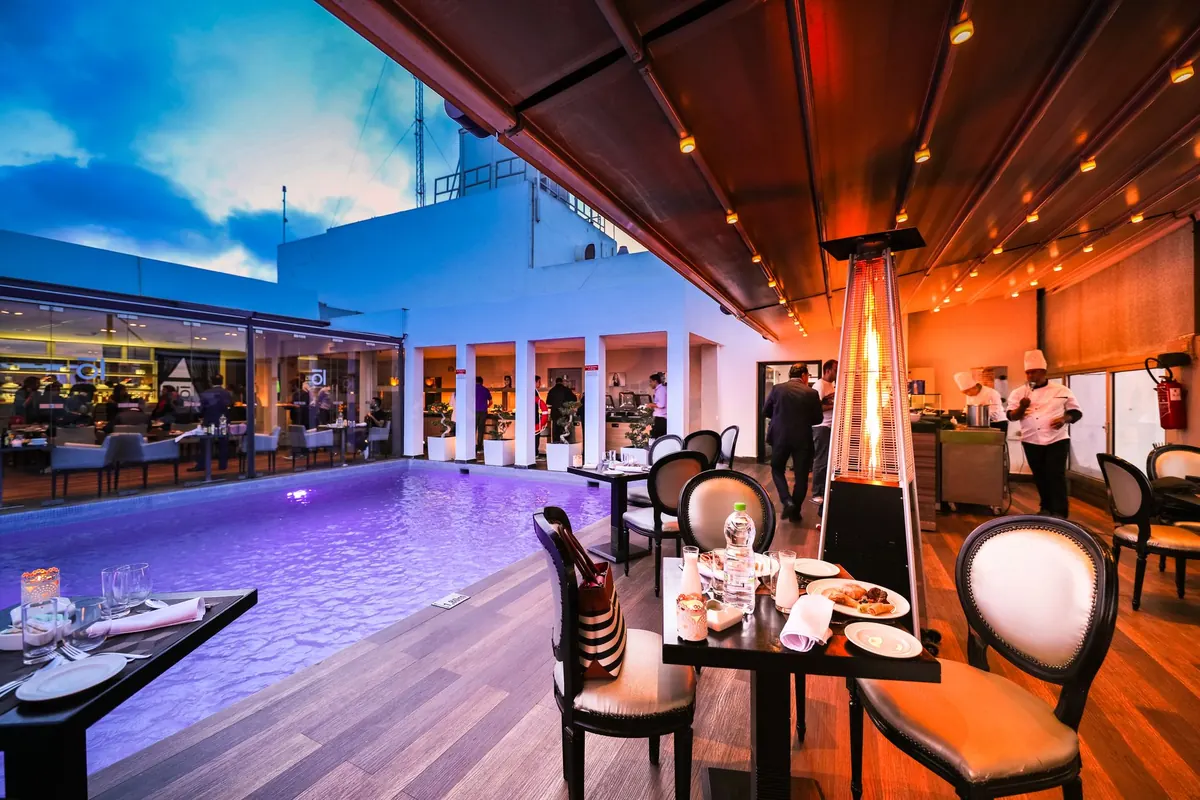
Radiant heaters — the infrared kind with a glowing element or a reflective panel — warm surfaces and bodies directly rather than trying to heat the volume of air. That makes them the right tool for an open terrace. Mushroom-style gas heaters and fire pits are convivial, but much of their output rises and leaves.
Placement is the whole game. Angle a panel so it faces the seats at roughly chest height, and remember that guests feel cold on their backs and ankles first. A heater behind a row of chairs is worth two above their heads. Cluster tables in autumn rather than spreading them out: one heater serving six people is efficient, one serving two is not.
- Walk the space cold and mark your clusters with tape before you move anything.
- Set heaters so no seat is more than a couple of metres from a radiant face.
- Route cables and gas hoses behind furniture, never across a walking line.
- Secure free-standing units against gusts; a fall is a fire risk, not just a nuisance.
- Check clearances to fabric, awnings and foliage in the manufacturer's instructions and respect them.
A few sensible cautions: never run a gas heater in a space you have sealed with screens and plastic, keep fire pits away from overhanging fabric, and have gas fittings checked by a qualified engineer. Confirm what your insurer and local fire regulations expect of a commercial terrace, and take professional advice on anything you are unsure of.
Windbreaks, and the value of not sealing everything
Wind is often the deciding factor on a still-but-cool evening. A glass screen on feet, a row of tall planters with evergreen shrubs, or a taut panel of sailcloth will transform the leeward side of a terrace. Repositioning is the cheapest windbreak of all: move the two-seat tables against the warm wall and leave the exposed middle for circulation.
The temptation is to close everything off. Resist it. A fully enclosed terrace with gas heat accumulates fumes and condensation, and guests notice the stuffiness before they notice the warmth. Leave deliberate gaps so air moves, and treat screens as shelter, not walls.
Light that reads as warm
Perceived temperature is not only physical. Low, warm light at 2700K tells people the evening is long; a white floodlight at head height tells them to finish up. Layer it: festoon strings above head height, a lantern or a battery lamp on each table, small markers along the path. Light the warm surfaces — brick, timber, olive leaves in a pot — rather than your guests' faces.
Real candles are lovely until the wind makes them a full-time job. Glass hurricanes solve most of it. Rechargeable table lamps are more practical still, provided someone actually puts them on charge overnight rather than leaving the job to whoever opens in the morning.
Hot drinks, offered before they are needed
The best time to offer a hot drink is the moment a guest pulls on a sleeve — not after they have asked. A small card on the table, or a line from the greeting, does the work for you: mulled wine, spiced apple juice, proper hot chocolate, a pot of tea, hot water with lemon and honey.
Small details keep it hot. Preheat cups with hot water before pouring. Bring the pot to the table rather than sending out a single mug. A thermos of spiced cider left on a long table keeps a group happy for an hour and looks generous. And make the non-alcoholic options as considered as the wine — a hot drink with alcohol warms the hands, not much more, so pair it with a blanket and one less degree of draught.
The ten-minute reset
None of this holds together without a short routine at both ends of service. Ten minutes before the first booking and ten after the last creates the difference between a terrace that works in October and one that simply has heaters standing in the corner.
- Before service: blankets stacked and dry, heater clearances clear, lamps charged, screens positioned, cushions brought out.
- On seating: put people in the sheltered cluster and leave the exposed corner for guests who ask for it.
- During service: one person checks the temperature of the room the way you would check a table — by sitting in it.
- At close: blankets in, heaters off and covered, candles out, anything damp taken inside.
And look after the team doing it. Staff who are cold rush, and rushed service is what guests remember. Allow layers, decent gloves and a warm drink behind the bar. The terrace will follow.
Photo: Zak Chapman / Pexels