There is a moment at a pavement cafe, somewhere between setting down your bag and the first sip, when you decide whether you are staying. It rarely has anything to do with the drinks list. It is the chair that doesn't rock, the shade that actually reaches your shoulders, the waiter who has already noticed you. Everything else is decoration.
A terrace is a piece of street design that happens to serve coffee. Get the design right and an ordinary espresso becomes an hour of your afternoon. Get it wrong and you drink it standing up, or you don't sit down at all. What follows is how to read a pavement cafe before you commit to it — and, if you run one, what the good ones get right.
The Chair Decides Before the Coffee Does
Start with the furniture, because it is the most honest thing on the terrace. A solid chair with a wide seat and a back that reaches your shoulder blades invites you to stay. A thin metal stool with a seat the size of a postcard tells you the owner expects you to leave after one drink. Neither is wrong, but only one of them makes a destination.
Then check the table. Four legs on uneven paving wobble; a single weighted pedestal usually doesn't. Sit down and put both elbows on it. If your knees don't fit underneath, you will spend the whole visit sitting sideways like a cyclist.
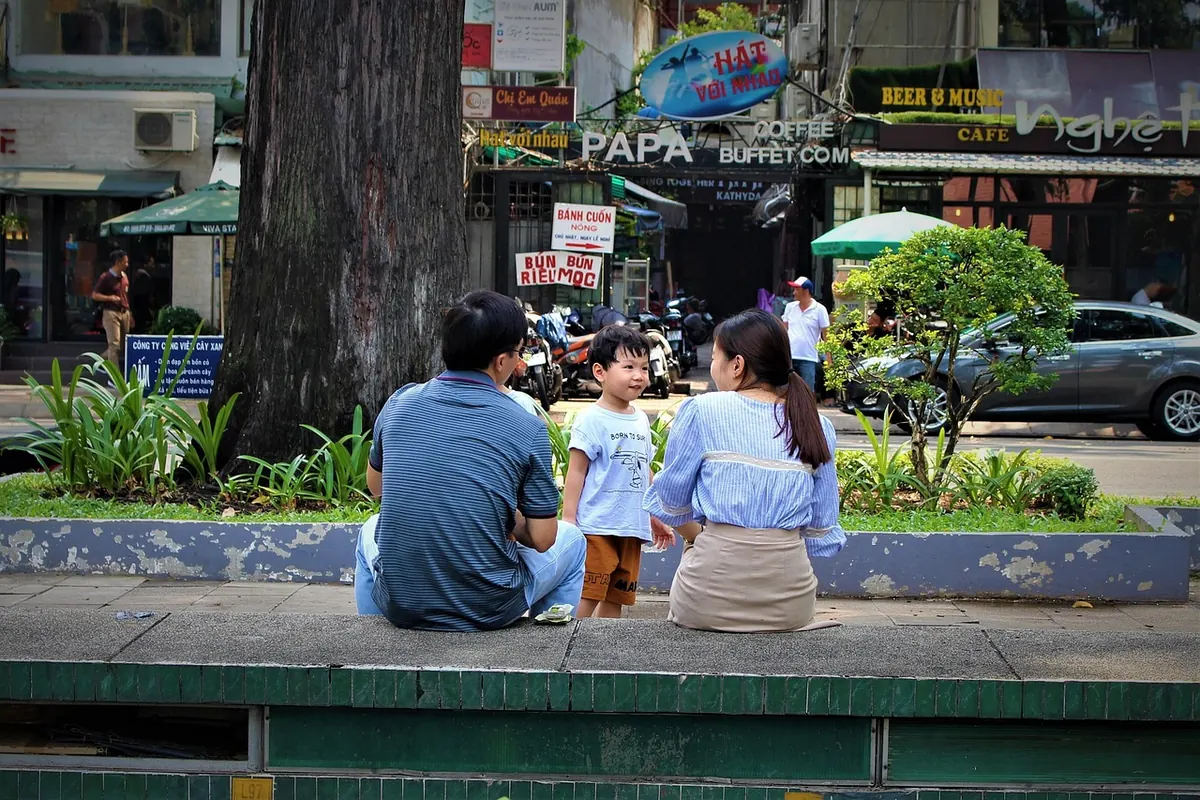
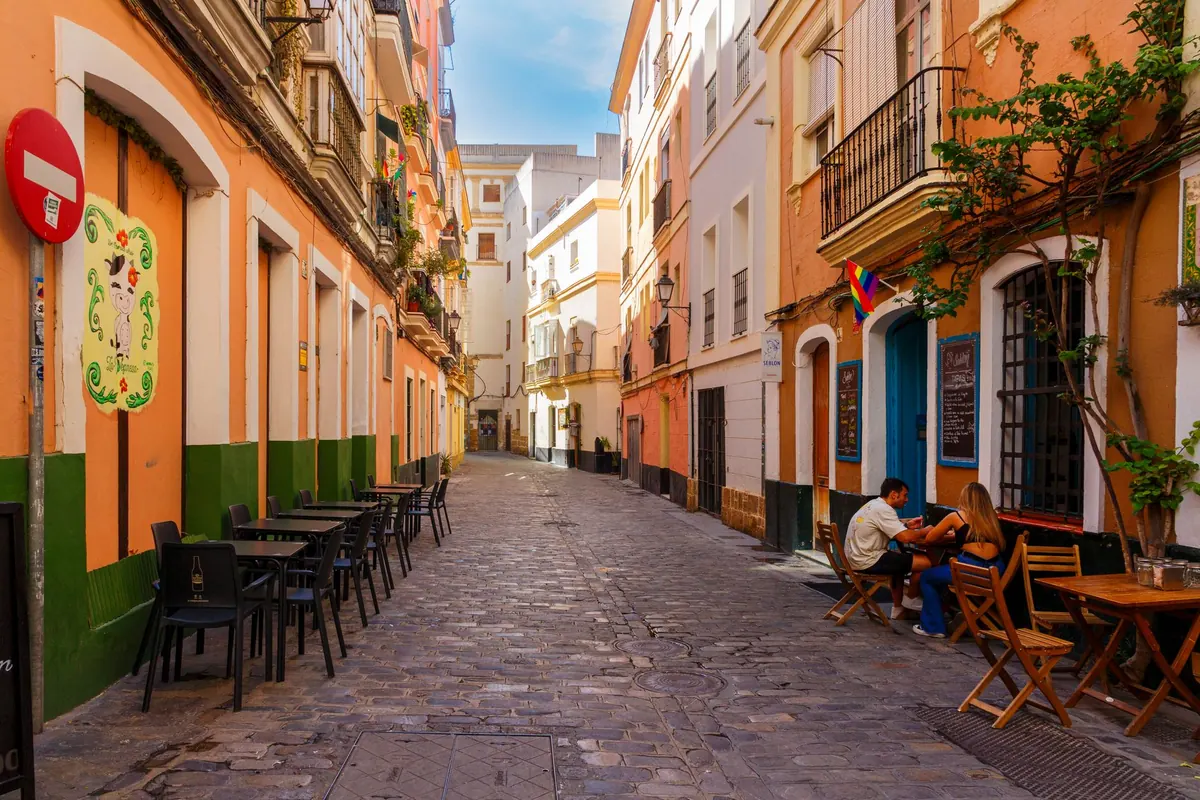
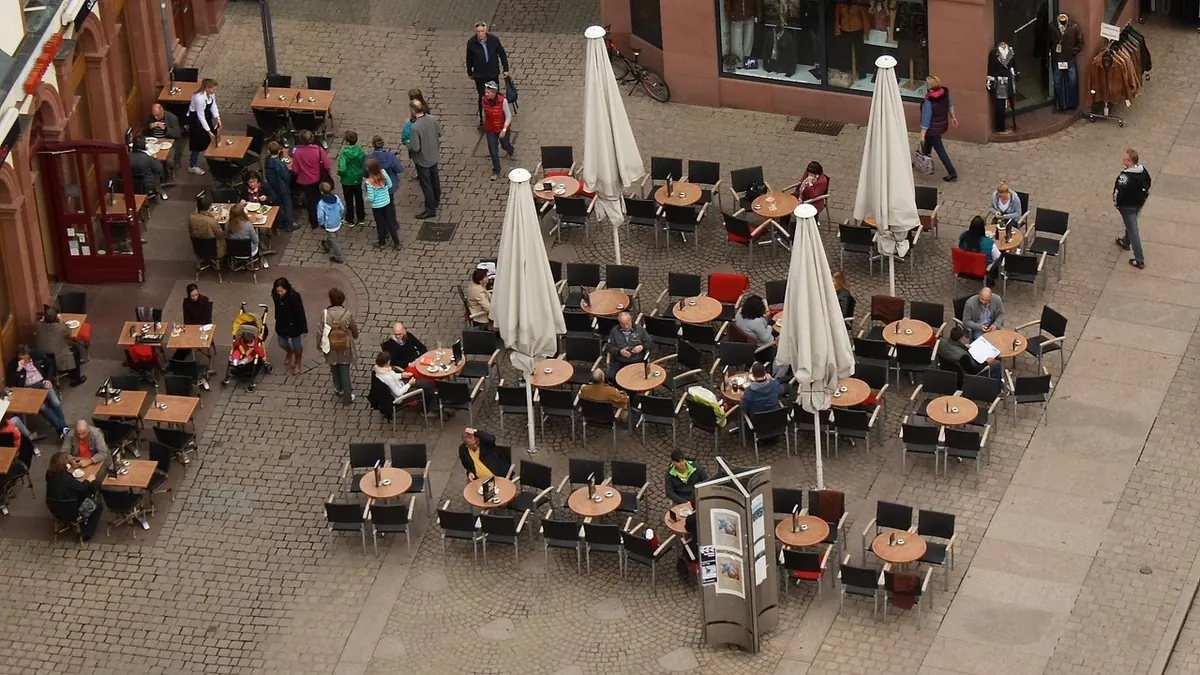
Spacing matters more than most people realise. Tables crammed close together create a shared conversation you didn't ask for; tables with room for a bag, a chair to push back, and a route past the salt shaker feel generous even when the terrace is full. Look at the edge of the seating area, too. A low planter or a row of pots gives you a back to lean against and separates you from the pavement — a small detail that changes the whole feeling of sitting there.
Shade Is a Design Problem, Not an Accessory
A single umbrella in the middle of four tables shades one of them. The rest get the glare. Good terraces solve shade properly, with a wide awning, a tree with a real canopy, or a run of umbrellas close enough to overlap.
Two things to check before you sit:
- Which way the street faces. One side will be in building shadow in the morning and sun in the afternoon; the other side does the reverse. Choose the side that will still be comfortable when you leave, not the one that is comfortable now.
- What the shade is made of. Canvas breathes; plastic sheeting traps heat and turns a mild afternoon into a greenhouse. A pale awning or a leafy tree is kinder than dark fabric, which absorbs heat and radiates it back at your table.
Surface counts as well. Stone paving and asphalt hold heat and give it back all afternoon; gravel, grass and planted edges stay cooler. If the sun is strong, sit with your back to the building rather than facing it — a pale facade reflects a surprising amount of light and heat straight at you. And whatever the shade situation, take sun protection seriously: a hat, sunglasses and sunscreen if you plan to sit for a while.
Read the Service Door
Find the door the staff come out of. The rhythm of your whole visit follows from where it is and how the terrace is arranged around it.
If waiters have to walk through the middle of the seating to reach the far tables, service will be slow at the back and your chair will be jogged on the way. If there is a small outside station — water bottles, cutlery, napkins, a tray stand — the terrace can be run without a trip inside every two minutes, and you will feel it in how quickly an empty cup disappears.
A well-run terrace usually shows several signs at once: one person whose job is clearly the outside tables, glasses cleared before they are asked for, and a clear path from door to pavement. The warning signs are just as visible: a single server carrying a tray above a queue of standing customers, or a terrace so dense that nobody can reach the second row of tables.
If you want attentive service, sit where you can be seen from the door without waving. If you want to be left alone with a book, take the far edge and face away from the entrance. Both are legitimate, and the layout usually makes one far easier than the other.
The Sound of a Good Street
Traffic noise is the thing people underestimate. A terrace on a quiet side street with a few bicycles is a different place from one on a wide road with buses, and the difference is not subtle — it is the difference between talking and shouting. Before you sit, listen for thirty seconds without speaking. Can you hear the person across the table at normal volume?
Some sounds help. The low murmur of other conversations, a spoon on a saucer, a chair dragged a few centimetres: those are the sounds that make a terrace feel inhabited. Reflective surfaces amplify the bad ones, and a glass frontage opposite will bounce engine noise straight back at you. Planters, fabric awnings and trees absorb it.
If noise is unavoidable, position matters. Sit close to the building wall rather than at the kerb; the facade gives you something at your back and blocks some of the road. Avoid the corner nearest a bus stop or a delivery bay, and notice whether the terrace sits under a residential balcony, where the mood can change sharply after a certain hour.
Street-Watching Is Half the Point
People choose pavement tables for the view, and the view is the street. A corner table at a crossroads gives you a continuously changing scene; a table facing a blank wall gives you your companion and nothing else. Facing out towards the pavement is almost always the better choice — it is why solo guests instinctively take the seat with their back to the building.
The best spots have layers: something happening close by at roughly table height, such as a flower stall or a queue forming, and something further off to rest your eyes on. A terrace raised a step above the pavement gives you a slight balcony effect and a better angle on all of it. One set below street level gives you a windbreak and a measure of privacy, though you lose the view.
A Thirty-Second Check Before You Sit
- Sit in the chair. Does it rock? Does your back touch the backrest?
- Look up. Is the shade over your table or the next one?
- Find the service door. Is there a clear path, and can you be seen?
- Listen. Could you hold a conversation without raising your voice?
- Check the street. Is there something worth watching, and will the light still be good in an hour?
Choosing Well, and Staying Longer
The pavement cafe worth sitting at is rarely the most fashionable one on the street. It is the one where the chair fits, the shade lands where you need it, the staff have a route that doesn't go through your table, and the noise stays below conversation level. Those are ordinary things, and they are exactly what turns a quick coffee into the part of the day you remember. Find a terrace that gets them right, order something you can drink slowly, and give it an hour.
Photo: meineresterampe / Pixabay